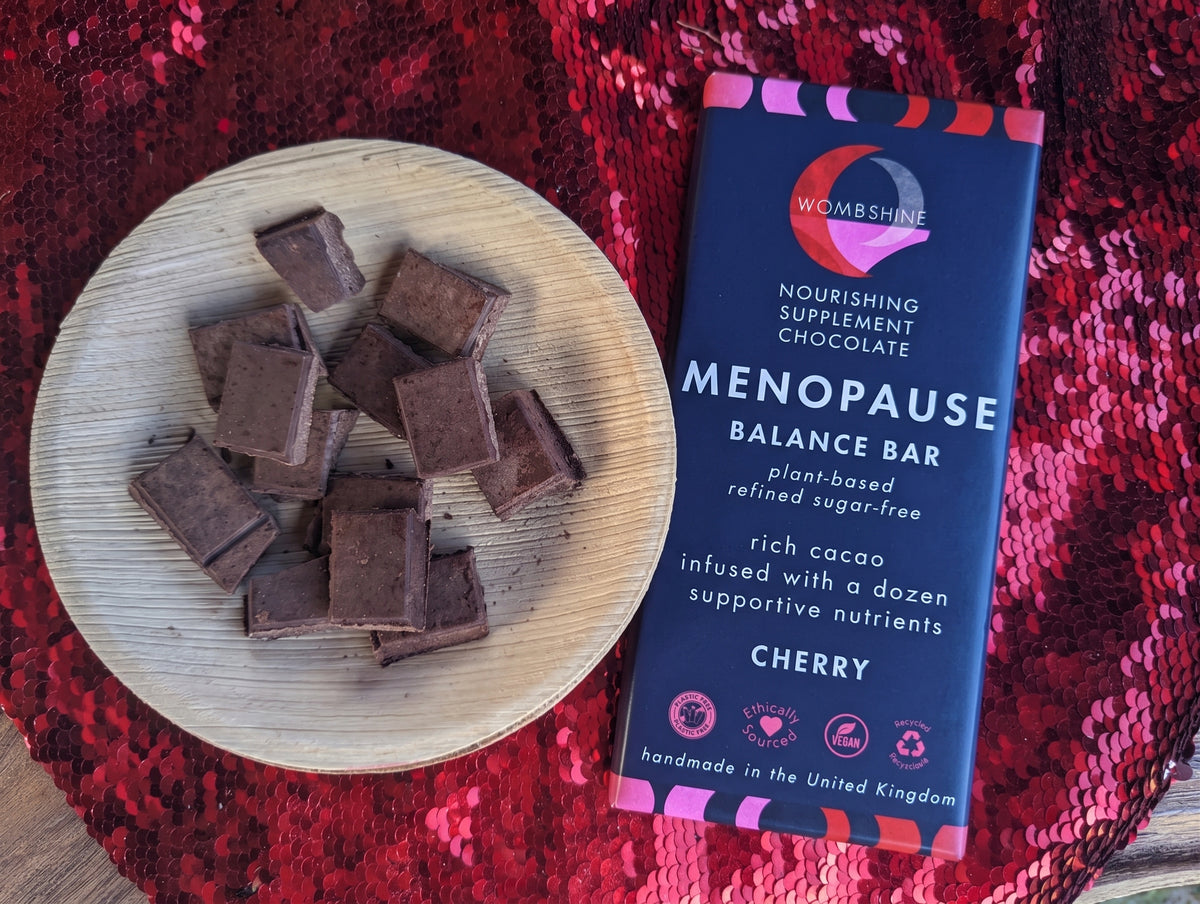
Menopause Balance Bar · Cherry
Power up, don't power through.
Perimenopause and menopause can be hard.
This cacao and cherry bar carries a dozen nutrients chosen to support your midlife era. A small, serious act of care you can actually keep up.
It's not in your head. And it's not just hot flushes.
Looking after yourself or a loved one can start small.
Support, where you feel it
Four menopause areas we target. What's in the bar for each.
The claims UK law allows us to make about menopause nutrients were last updated in 2012 - we've come a long way in understanding hormonal health since then!
If you're up for helping us campaign to update the law, please get in touch 💪🏼.
Until then, know we're using the best ingredients we can source from modern science and traditional wisdom.


How it works
Two rows a day to target menopause symptoms.
No capsules, no powders - just deliciousness. Break off two rows and the dozen nutrients come with the chocolate.
- Two rows (33g) a day: with the morning coffee, after lunch, instead of a biscuit.
- Regular enjoyment keeps the body stocked up. Menopause is continuous, so is the support.
- Cacao with whole cherries. Plant-based, refined sugar-free, handmade in the UK, in plastic-free, recyclable packaging.
- Try a bar first. If it works for you, subscribe and get it through the letterbox every month.
The long view
Who do you want to be at 60, 70, 80?
Menopause is more than a list of symptoms to get through. The person you'll be in the decades to come is being shaped now: by what you eat, how you move, how you sleep, and even who you talk to.
This is the decade where small, consistent habits pay off most. Bones, muscle, heart and brain are all affected by your choices. Even a little goes a long way.
What's actually happening?
Perimenopause is the run-up: the years when oestrogen and progesterone start to swing and then fall, usually from the early-to-mid 40s, sometimes as early as 35. Periods change first: heavier, lighter, closer together, further apart. Symptoms come from the swings as much as the drop.
Menopause itself is a single day: twelve months after your last period. In the UK the average age is 51. Everything after is postmenopause. For many people symptoms ease over a few years; for some they don't. Both stages are normal. Neither has to be endured in silence.
Still bleeding, already feeling it: perimenopause
For years you can have periods and menopause symptoms at the same time. This can feel confusing, but it's just perimenopause. The Balance Bar is made for this time as much as for after: daily support wherever your cycle is. If you still bleed, our period truffles can sit alongside it on those days.
Eat for the decades ahead
Bone, muscle and heart all change as oestrogen falls, and food is one of the few levers that's entirely in your control.
- Protein at every meal. Muscle is harder to keep after 45, and it's what keeps you strong and steady at 80.
- Calcium and vitamin D. The NHS suggests 700mg of calcium a day from food, and a vitamin D supplement from October to March. The bar helps, but it's a top-up, not the whole answer.
- Fibre and plants. Cholesterol tends to rise after menopause; oats, beans, lentils, nuts and vegetables push back.
- Phytoestrogen foods. Soy, flaxseed, chickpeas all contain plant oestrogen. The evidence is mixed, but the foods are good for you either way.
- Notice what triggers flushes. For some people it's alcohol, caffeine, spicy food or a hot room. Not for everyone. Keep a note for two weeks and see.
Move for the body you'll have at 80
This is the one most worth starting. Bone density drops fastest in the first few years after menopause, and muscle goes quietly with it. Both respond to load.
- Lift something, at least twice a week. Weights, resistance bands, bodyweight. Heavier than feels polite.
- Weight-bearing movement most days. Walking, stairs, dancing, running if your joints agree.
- Balance. Try standing on one leg while the kettle boils. Falls, not age, break hips.
- Something you actually like. The UK guideline is 150 minutes of moderate activity a week plus two strength sessions. Whatever it looks like for you, do the thing you'll want to keep doing.
Nurture your sleep
Night sweats, 3am wide-awakeness and a mind that won't stop are among the most common and least talked-about symptoms.
Some things that might help:
- A cool, dark room; layers and breathable bedding you can shed fast.
- Keeping the same wake time every day, even after a bad night. It's the anchor.
- Avoid alcohol and caffeine after lunch: they can help you fall asleep but then wake you at 3.
- Magnesium contributes to normal psychological function and to the reduction of tiredness and fatigue; it's in our Balance Bar, and two rows a day will keep levels healthy.
- If your sleep has been wrecked for weeks, that alone is a good reason to see your GP. Treating the cause beats surviving the symptom.
HRT, your GP, and what a chocolate bar can't do
Let's be straight: the Balance Bar is food. It is not HRT and it isn't a substitute for anything a doctor prescribes.
For many people, HRT is the most effective treatment for menopause symptoms, and UK guidance (NICE) is that for most people with symptoms the benefits outweigh the risks. Local (vaginal) oestrogen for dryness, soreness and recurrent UTIs is safe for most people and hugely under-used. Non-hormonal options exist too.
If symptoms are affecting your life, book a GP appointment and say the word "perimenopause" out loud. You can ask for a doctor with menopause training, and don't be afraid to go back if the first answer is "you're too young" or "it's just stress".
Mood, rage, anxiety, and when it's more than mood
Low mood, anxiety, sudden rage and a loss of confidence are common in perimenopause, and they're driven by hormones, not by a flaw in you. Naming that can help. So can saying it to someone.
If you're struggling to cope, or it's been weeks and nothing lifts, see your GP: menopause-related low mood is treatable, and HRT, talking therapy and other options all exist. If you're in crisis or thinking about harming yourself, call Samaritans on 116 123 (free, UK, any time) or 999 in an emergency.
Talk about it: at work, at home, with the people five years ahead
Half the population goes through menopause, and most employers now have, or are writing, a menopause policy. You can ask for adjustments: a fan, flexible starts after bad nights, breaks. At home, partners and teenagers can't read your mind, but most respond well to being told plainly what's going on. And find the people a few years ahead of you. Their experiences can be invaluable.
This is general information, not medical advice, and not a substitute for your GP. We lean on the NHS menopause pages, Women's Health Concern (the patient arm of the British Menopause Society) and the NICE menopause guideline.
Buying for a parent, a partner, a best friend?
Order your bars